This is a FREE EXCERPT from
Bruce Brown's 100 Voices...
Billy Garnett on Crazy Horse's Vision
An Indian Agency interpreter's on Crazy Horse's first Dream Vision...
|
From an interview with Eli S. Ricker.
|
Note |
BILLY GARNETT RECOUNTS CRAZY HORSE'S FIRST VISION
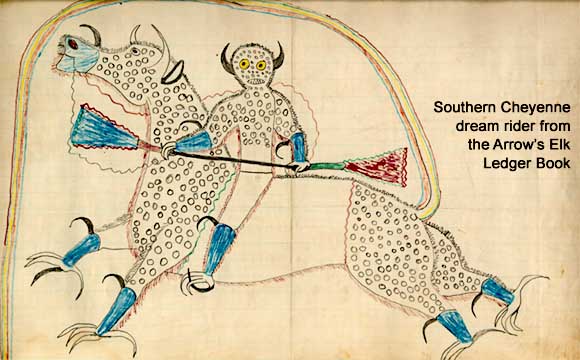
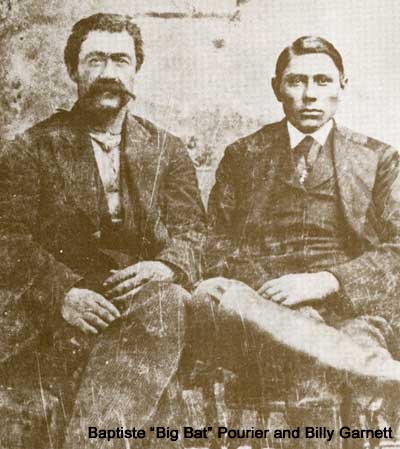 "Garnett heard Crazy Horse in 1868 tell about his 'medicine.' It was up in the vicinity of the Rosebud that it occurred. Whether this appeared to him in a dream or trance or whether he was self-mesmerized, Garnett does not know. But Crazy Horse told the story that he was near a lake. A man on horseback came out of the lake [a water spirit] and talked with him. He told Crazy Horse not to wear a war bonnet [and] not to tie up his horse's tail. (The Indians invariably tie up their horses' tails in a knot.) This man from the lake told him that a horse needed his tail for use; when he jumped a stream he used his tail and [also] at other times, and as Crazy Horse remarked in telling this, he needs his tail in summer time to brush flies. So Crazy Horse never tied his horse's tail, [and he] never wore a war bonnet. It is said he did not paint his face like other Indians. The man from the lake told him he would never be killed by a bullet, but his death would come by being held and stabbed, as it actually was." Garnett Interview, Ricker Collection, NSHS, reel 1, tablet 1, no pagination. "Garnett heard Crazy Horse in 1868 tell about his 'medicine.' It was up in the vicinity of the Rosebud that it occurred. Whether this appeared to him in a dream or trance or whether he was self-mesmerized, Garnett does not know. But Crazy Horse told the story that he was near a lake. A man on horseback came out of the lake [a water spirit] and talked with him. He told Crazy Horse not to wear a war bonnet [and] not to tie up his horse's tail. (The Indians invariably tie up their horses' tails in a knot.) This man from the lake told him that a horse needed his tail for use; when he jumped a stream he used his tail and [also] at other times, and as Crazy Horse remarked in telling this, he needs his tail in summer time to brush flies. So Crazy Horse never tied his horse's tail, [and he] never wore a war bonnet. It is said he did not paint his face like other Indians. The man from the lake told him he would never be killed by a bullet, but his death would come by being held and stabbed, as it actually was." Garnett Interview, Ricker Collection, NSHS, reel 1, tablet 1, no pagination.
According to Garnett, Crazy Horse performed the following ritual before going into battle: "taking some of the dirt thrown up by the pocket gophers, he would rub it on his horse in lines and streaks-not painting him, but passing this dirt over him in this way with his hand; and he would spat a little of the same on his own hair in a spot or two, and put in his hair also two, or three straws ofgrass, two or three inches long. As I understand it, the man from the lake [a water spirit] told him to use the straws and the dirt as described." Gamett Interview, Ricker Collection, NSHS, reel l, tablet 1, no pagination.
The Death of Crazy Horse: A Tragic Episode in Lakota History edited by Richard G. Hardorff, Bison Books, Lincoln, NE, and London 2001 p 70 - 83
Billy Garnett was an Indian Agency interpreter at the time Crazy Horse was murdered. He supposedly heard Crazy Horse's account of the vision first hand, and said Crazy Horse gave the location as the Powder River country of what the Americans call southeastern Montana.
© Copyright 1973 - 2020 by Bruce Brown and BF Communications Inc.
Astonisher, Astonisher.com, Conversations With Crazy Horse, 100 Voices, Who Killed Custer?, The Winter Count of Crazy Horse's Life, and Mysteries of the Little Bighorn are trademarks of BF Communications Inc.
BF Communications Inc.
P.O. Box 393
Sumas, WA 98295
(360) 927-3234
Website by Running Dog  |
|
|





|