This is a FREE EXCERPT from
Bruce Brown's 100 Voices...
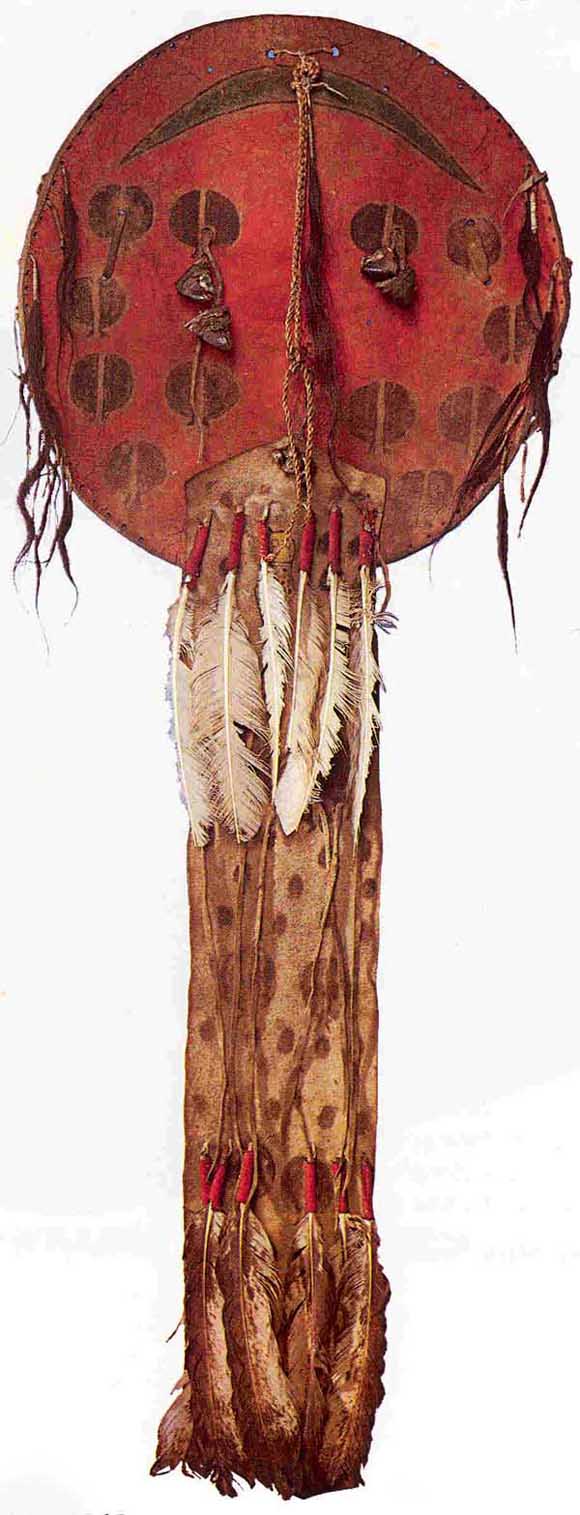
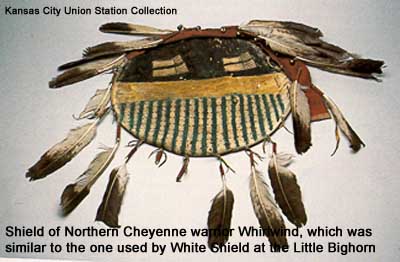 The shield at right belonged to Northern Cheyenne warior Whirlwind, and is very similar to the one used by reknowned Cheyenne warrior White Shield at the Battle of the Little Bighorn. Whirlwind gave the shield to Daniel Dyer as a gift in 1885 and it is now in the Kansas City Union Station Museum collection. The shield at right belonged to Northern Cheyenne warior Whirlwind, and is very similar to the one used by reknowned Cheyenne warrior White Shield at the Battle of the Little Bighorn. Whirlwind gave the shield to Daniel Dyer as a gift in 1885 and it is now in the Kansas City Union Station Museum collection.
According to the Union Station catalog notes:
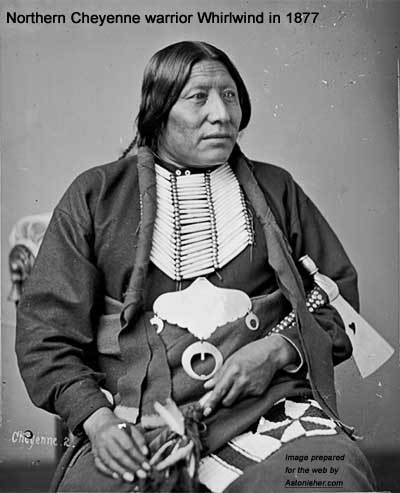 This shield is an example of a group shield, a shield with a design used by more than one person. This particular shield belonged to Whirlwind, who gave it to Daniel Dyer in 1885. This same shield and a nearly identical one carried by White Bird are depicted in ledgerbook drawings. According to David Halaas and Andrew Masich, the design also was used by Buffalo Thigh, Little Robe, Black Hawk (who also may have been the same person as Whirlwind), and Starving Coyote. Whirlwind was a Cheyenne warrior who later became a peace chief and one of the signers of the Medicine Lodge Treaty. By 1884, he was living on the Cheyenne/Arapaho Reservation. In the original "Dyer Catalog," the entry is for "Shield presented to D. B. Dyer by his friend Whirlwind." In August 1885, the Cheyenne Transporter wrote about the shield, as well. A group of Cheyenne chiefs, including Whirlwind, representing the Cheyenne people gave the shield to Colonel Dyer during a ceremony at the time of the Dyers' departure from the Darlington Agency. George Bent was the interpreter. Nearly 30 years later, Bent wrote about the role of shields in Cheyenne battles, "...everyone was told to get ready for a fight. Every man who had a war bonnet, shield or other sacred object had to go through certain ceremonies. A man with a war bonnet would take it out of its bag and hold it up, first to the south, then to the west, to the north, and to the east, and then put it on his head. A shield was taken from its case and held in the right hand. It was then dipped toward the ground and shaken four times, held up toward the sun and shaken four times, and then placed on the left arm, where it was carried in battle." (A Life of George Bent, p. 216.). This shield is an example of a group shield, a shield with a design used by more than one person. This particular shield belonged to Whirlwind, who gave it to Daniel Dyer in 1885. This same shield and a nearly identical one carried by White Bird are depicted in ledgerbook drawings. According to David Halaas and Andrew Masich, the design also was used by Buffalo Thigh, Little Robe, Black Hawk (who also may have been the same person as Whirlwind), and Starving Coyote. Whirlwind was a Cheyenne warrior who later became a peace chief and one of the signers of the Medicine Lodge Treaty. By 1884, he was living on the Cheyenne/Arapaho Reservation. In the original "Dyer Catalog," the entry is for "Shield presented to D. B. Dyer by his friend Whirlwind." In August 1885, the Cheyenne Transporter wrote about the shield, as well. A group of Cheyenne chiefs, including Whirlwind, representing the Cheyenne people gave the shield to Colonel Dyer during a ceremony at the time of the Dyers' departure from the Darlington Agency. George Bent was the interpreter. Nearly 30 years later, Bent wrote about the role of shields in Cheyenne battles, "...everyone was told to get ready for a fight. Every man who had a war bonnet, shield or other sacred object had to go through certain ceremonies. A man with a war bonnet would take it out of its bag and hold it up, first to the south, then to the west, to the north, and to the east, and then put it on his head. A shield was taken from its case and held in the right hand. It was then dipped toward the ground and shaken four times, held up toward the sun and shaken four times, and then placed on the left arm, where it was carried in battle." (A Life of George Bent, p. 216.).
The Sioux warrior's shield shown below is from the collection of David T. Vernon, which is now permanently displayed at the Colter Bay Visitor Center in Grand Teton National Park.
The Spirit of Native America: Beauty & Mysticism in American Art by Anna Lee Walters, Chronicle Books, San Francisco 1989, p. 71
© Copyright 1973 - 2020 by Bruce Brown and BF Communications Inc.
Astonisher, Astonisher.com, Conversations With Crazy Horse, 100 Voices, Who Killed Custer?, The Winter Count of Crazy Horse's Life, and Mysteries of the Little Bighorn are trademarks of BF Communications Inc.
BF Communications Inc.
P.O. Box 393
Sumas, WA 98295
(360) 927-3234
Website by Running Dog  |
|
|
|