100 Voices from the Little Bighorn: eye-witness accounts of the Battle of the Little Bighorn Windows 7 / Windows XP Wireless Home Network Bible by Bruce Brown
Biesbol en Cuba! Astonisher.com Free (Thought) Banners


Astonisher.com logo
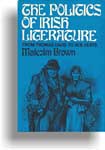
cover thumbnail of Malcolm J. Broiwn's "The Politics of Irish Literature"

"Mr. Brown's masterpiece..."
-- Michael Foote in the London Evening Standard

The Poltics of Irish Literature
by Malcolm Brown

* READ the complete book free on astonisher.com


The Politics of Irish Literature
From Thomas Davis to W.B. Yeats

by Malcolm Brown

Chapter Twenty
The Irish Party in Maneuver

BY THE END of 1883 Parnell began to look unbeatable. He had precipitated the "fall of feudalism in Ireland," demoralized the gentry, driven "Buckshot" Forster out of office, tamed Davitt and Dillon, silenced his maenad sisters, hurried Gladstone and the Liberal party off to conduct private debates on the hidden virtue of Home Rule, confounded a hostile papal rescript, and ridden out safely both the Phoenix Park assassinations and James Carey's garrulousness at the witness table. His lifelong enemy, the London Times, confessed itself mastered: "The Irishman has played his cards well, and is making a golden harvest. He has beaten a legion of landlords, lawyers, and encumbrances of all sorts out of the field, driving them into workhouses. He has baffled the greatest of legislators, and outflanked the largest of British armies in getting what he thinks his due."' Parnell himself noted dryly that his power already exceeded O'Connell's and was still rising. That power he now diverted into his single-minded post Kilmainham objective: to force Parliament to make Ireland a free gift of her independence.

Parnell's first move under his revised offensive was to start up his own newspaper. Drawing from the American funds, he bought up Richard Pigott's printing presses and commenced publication of a weekly called United Ireland (not to be confused with various newspapers of similar name conducted by John Mitchel, Arthur Griffith, and General O'Duffy). Nobody could have said that the newspaper shared in Parnell's own qualities of silence and coldness. For editor he selected a young repc rter from Cork named William O'Brien, another Irishman in possession of a fearful word hoard. Once when he was in jail he wrote a novel called When We Were Boys (1890). He apologized for its epic excesses; if he had had a shorter jail sentence, he said, he could have been more economical in his verbal

effects. It is by no means an imperishable work of art, but it has a striking verbal energy. In writing for United Ireland, O'Brien developed a talent to sting and to rally that rivaled Mitchel's. Putting aside the sedate and learned journalistic style developed by the Nation under Duffy and the Sullivans and practiced, too, by O'Leary on the Irish People, he brought to perfection the Irish newspaper mannerism that Yeats called "pepper-pot."

A passage from O'Brien's leading article on the Kilmainham treaty will suggest the free and easy belligerence of United Ireland: ". . . the money it [the Castle] spends and the favors it distributes, and the foul toads who use it as a cistern to knot and gender in it, are just the things which make the harmless travesty of Vice-Royalty an offence and scorn to Irishmen. The toads are the gang of alien officials who nestle in the snuggeries of the Castle like as many asps in the bosom of their country. Down with the whole bundle of rottenness and imposture!" This stirring message went to press on Thursday, May 4, 1882, and appeared on the Saturday of the Phoenix Park murders. English members suggested in the House that O'Brien's prose style had inspired the murders. The next Saturday his hysteria against the assassins outscreamed the English press itself.

This frenzy was the antithesis of Parnell's self-control, but Parnell liked O'Brien the better for that. He raised no objections to United Ireland (though he did not read it himself), and cheered O'Brien on, freeing the paper from any league executive veto and guaranteeing him whatever financial support he needed to fight off his multiplying brood of libel litigations. Later O'Brien argued that his verbal fury was never intended to be taken seriously: "Violence is the only way of insuring a hearing for moderation." This stratagem obviously embodied incompatibilities, and they troubled him. He once told Wilfred Blunt, "I sometimes think of Joe Brady and O'Donovan Rossa, and my mind misgives me whether they may not all this while have been right and we the botchers."4 The time-honored anodyne for the pains of political contradictions was the cultivation of the national mystique, and O'Brien welcomed it back affectionately from its long vacation during the hardheaded materialistic epochs of Fenianism, parliamentary obstruction, and the land war.

He could invoke without effort all the standardized, or Sullivanite, forms of sanctimonious political spirituality. The hero in his novel exclaimed: "Woe's the day [when] this high-strung Irish race of ours gives up its faith! It is to us what purity is to a woman. Without mystery, without the supernatural, both in religion and in politics, every fruit we care for turns to ashes upon Irish lips." Like Patrick Pearse he repeopled the countryside with barefoot saints "governed by the harp and the Angelus bell." The stoical Old Fenian exaltation of the man in the gap he transposed into pure maudlin. In one of the scenes of his novel the hero is on trial in Green Street Courthouse for treason. He meets another defendant called "the poet" coming from the courtroom: "'What luck?'Ken whispered, as they clasped hands. The poet's large, melancholy eyes filled with a luminous glow, and the sweetest smile came over the deep-dug lines that curved from his nostrils around the comers of his mouth. `The best of all luck-death for Ireland!"' T. D. Sullivan naturally interpreted Parnell's newspaper venture as a raid into his private poetic property. As I have noted, he once belittled John O'Leary's newspaper competition with the taunt, "and it never paid." He could not say the same for United Ireland. O'Brien's sensationalism sent his circulation soaring to one hundred thousand, stealing away the Nation's subscribers until its net worth sank toward zero.

Table of Contents
The Politics of Irish Literature by Malcolm Brown

Astonisher.com is pleased to offer The Politics of Irish Literature by Malcolm Brown, complete and free for your personal use.

The Politics of
Irish Literature

From Thomas Davis to W.B. Yeats
by Malcolm Brown
Part I: The Peculiar Irish Setting
1. History and Poetry: Some Irish Paradoxes
2. Thomas Davis' Ireland
Part II: Young Ireland
3. O'Connell and Davis in Partnership
4. The Nation's First Year
5. The Retreat from Clontarf
6. Black '47
7. '48 and Insurrection
8. Beside the Sickbed: Carlyle, Duffy, Dr. Cullen
9. John Mitchel after '48
Part III: Fenianism
10. Mr. Shook
11. Fenianism Mobilizes
12. O'Leary and the Irish People
13. "The Year for Action"
14. The Agony of Fenianism
Part IV: Home Rule
15. The Ballot Box Once More: Isaac Butt
16. Parnell and Davitt
17. The Land War in Mayo
18. After Kilmainham: Bakhuninism in Phoenix Park
19. After Kilmainham: Davitt and Standish O'Grady Take Stock
20. The Irish Party in Maneuver
21. Enter: W. B. Yeats
22. Catastrophe
23. Poetry Defends the Gap: Yeats and Hyde
24. Literary Parnellism

Praise for
The Politics of Irish Literature
cover thumbnail for "The Politics of Irish Literature" by Malcolm Brown

"This brilliant study of the intersection of politics and literature in Ireland amounts to a dazzling portrait gallery. Reading it one feels about one the breath, warmth, and passions of the dead all come alive again."
-- Sean O'Faolain in the Manchester Guardian

"Mr. Brown's masterpiece has made me want to hire a nearby housetop and recite whol chunks to every passerby..."
-- Michael Foote in the London Evening Standard

"The author of the best book on George Moore now gives us what is in all likelihood the best book on the politics of modern Irish literature."
-- Virginia Quarterly Review

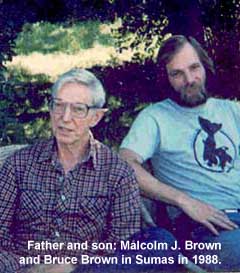
Professor Malcolm J. Brown walking in the garden with his grandaughter Laurel Brown, Seattle, WA, July 1986

University of Washington Professor Malcolm J. Brown (1910 - 1992) walking in the garden with his grandaughter Laurel Brown, Seattle, WA, July 1986.

Additional reading -- Malcolm Brown's George Moore: A Reconsideration, also here on astonisher.com.

II

To transform Irish political activity after Kilmainham into a serious parliamentary threat demanded a more disciplined Irish party than then existed. Vestiges of Butt's old oratorical society gave place to the mechanisms of the modern political machine. Like O'Connell and Stephens, Parnell ran a oneman show. He took full personal command of the party treasury, the choice of candidates, the tactics at Westminster, and all major policy decisions. He named the party's vice-chairman to suit himself, picking Justin M'Carthy, a literary man believed unlikely to be troublesome.

The old phrase, "pledge-bound Irish party," loosely used since the days of the Tenant League, now took on meaning; and the Irish members for the first time in history dared not miss a division of the House. Parnell's boldest innovation was the practice of sending Irishmen without private incomes into the House of Commons. Since the members drew no salary, he simply paid them a living allowance out of the American funds. Needless to say the scheme tightened party discipline, but shock waves followed. Frank Hugh O'Donnell resigned in protest against the plebian contamination of a society of gentlemen under the new "Tammany centralism," and Captain O'Shea expressed his grave displeasure that "the worst features of American politics had been introduced into our country by filthy swine like Parnell and his crew."s George Moore's book on the land war devotes a special chapter to the new Irish member as a type. A bogtrotter made drunken on the scents of Mayfair, a ruffian ignorant of Baudelaire and Wagner, he hides the tainted sources of the income that keeps him at Westminster by pretending to be an inventor or a journalist. This solemn anxiety lingered on into the last days of the Irish party, giving an added touch of contempt to the literary stereotype of the Irish politician; and one particularly hears its echo in the abstraction of those who "put party above nation."

III

The finished design for the heroic Parnell, the Irish colossus, the Chief, was now roughed out for the casting. He was perfectly congruent in the lofty role. His superb talent for command had overcome all the Irish competition. He excelled all his Irish comrades in his coolness under fire, drawing upon incomparable inner reserves of tranquillity and self-assurance. None of his comrades could match his disdain for every attractive public mask of English imperial motive. On the floor of the House he was in his very element: there he was not only unrivalled among the Irish members, but was conceded to be next only to Gladstone himself, the most formidable parliamentarian of the age.

It must not be supposed from Parnell's ample gifts that he was a selfcreated leader raised up by some act of sheer Nietzschean will. The political energy behind his succession of dazzling victories had sprung directly, unmistakably, out of the swarming social-revolutionary impulse of the Irish nation. Beginning at Westport, the revolution polarized around him. He had counseled militance; and victorious militance carried him on its shoulders for its emblem. The agrarians and Home Rulers named themselves "Parnellites," feeling the strength that they had given him flowing back upon themselves as a strength that he seemed to have given them. In Bertolt Brecht's impressive words applied to a parallel case, he became "der Lehrer des Volkes der von den Volk gelernt hat." That was his secret: The teacher of the people, by the people taught.

After Kilmainham the tonic interaction between the leader and the led slowly weakened. Parnell's authority took on increasingly the quality of sleight of hand, of regal mannerisms in a staged atmosphere. Tim Healy explained: "We created Parnell and Parnell created us." The pattern of reciprocity envisioned in his image was, unhappily, fast losing its creative force. A claque formed among the young lieutenants. Davitt thought he saw rising up a "cult of personal worship." He protested that there was too much of the "high-flown" in this new Parnell, this "Moses of the Irish race," this "Leader destined by Providence to carry them to the Goal of the National Aspirations." In reply, the young lieutenants labeled Davitt a crank and commanded him to be silent.

The Parnellite cult of personal worship with its fabulous Parnell, endowed openly with supernatural attributes, fixed itself in the minds of most Irishmen. The old victories of the land war seemed through the haze of time to have been Parnell's personal magic, even to those like Joyce's Mr. Casey who had gone to jail to help win them.

Whatever good a farmer's got
He brought it all to pass.

The "cult of personal worship" made an attractive Carlylean design out of Irish history, recasting it as the biography of the Chief, a self-moved mover with cosmic contacts. The fervor of this tribute to Parnell is altogether understandable, but it does not supply a particularly penetrating insight into the substance of Irish history.

While Parnell's private will was winning total control of the Irish party, he grew more magisterial, mysterious, inaccessible. Weeks would pass without his appearing on the floor of the House. Once Gladstone sent him an urgent message but he could not be found. There was fear that he might have been accidentally injured or killed. Pursuing every clue to the mystery, Justin M'Carthy finally felt it necessary to open his mail in search of an address. In this way the party's inner circle picked up a hint that pointed to the Kent suburb of Eltham, to the residence of Mrs. Katherine O'Shea, where he had established himself secretly but substantially, with his goldassay laboratory set up in the basement. His romatic elusiveness was partly explained by a natural preference for the company of Mrs. O'Shea over that of T. D. Sullivan and Joe Biggar. It was later learned also that he had been critically ill and that Mrs. O'Shea's nursing care had perhaps saved his life. But an overruling motive in his disappearance was political. He understood that inertia is as essential to political warfare as spasms of energy. From 1882 to 1884 he mostly sat out the performance, waiting, surrendering the public arena to his young fighters.

IV

The Parnellite party's new discipline and centralization of leadership greatly enhanced its freedom to maneuver. James Fintan Lalor had warned the parliamentarians in 1847: "You lie helpless on the highway before the great English parties and they will trample you to death." Irish history offered ample evidence to support his contention. Melbourne, Russell, Aberdeen, and Gladstone all had thrived on their Irish alliances, but the junior partner always ended up with a headache. Parnell felt that the success of his new program depended upon his ability to avoid the old trap. Naturally, it would be necessary for him to philander, especially with the Liberals, but always short of matrimony in order not to chill the ardor of the rival suitor. For the way to Irish success at Westminster lay in the "independence of the Irish party," that is, in playing off the one English party against the other.

Parnell's Irish party of 1884, a little band now grown to thirty-odd, was still not very impressive among six hundred hostile members. It held promise, though, of great strength soon, if it could bide its time. Gladstone had decided that the Liberal party must penetrate the bottom strata of British society in search of votes, and he had put into the legislative works a daring new extension of the franchise to include all householders. For Ireland, the bill promised to enfranchise the "mud-cabin vote," expanding the existing electorate from one-quarter million to three-quarters of a million voters. Late in 1884 the new voting reform became law. Shortly afterward a second act was passed leaving the Irish House apportionment unchanged at 103 members, even though the population had drastically declined since the number of Irish members was last fixed. Immediately the recluse of Eltham was once more in the midst of the whirl. Without waiting for formal certification by the next general election, Parnell began to demonstrate what "the independence of the Irish party" meant in practice. When Gladstone brought in a bill to extend the life of the old Crimes Act of 1882, the skeleton left behind by the Phoenix Park murders, Parnell led the Irish members into the Tory opposition lobby and defeated the government. In June 1885 Gladstone resigned and joined William E. Forster as another of the distinguished company who had been driven from office by the uncrowned king of Ireland.

A season of busy Irish political intrigue set in, as the two parties came forward to play in Parnell's game, bidding for the new Irish votes. The Tories held power only on his sufferance and were amiability itself. Lord Salisbury, the new prime minister, courteously neglected to re-enact Gladstone's Crimes Act. He also sponsored a land-purchase act. His lord lieutenant of Ireland, Lord Carnarvon, designer of the semi-independent government of Canada, solicited an interview with Parnell. The two met in a Mayfair mansion closed for the summer; and among the rolled-up carpets and covered furniture Parnell distinctly heard his host intone the magical words "Home Rule." Lord Randolph Churchill gave Parnell to believe that a Tory like himself was "as likely" to take up Home Rule "as any other Englishman": "The policy of the late government so exasperated Irishmenmaddened and irritated that imaginative and warm-hearted race-that I firmly believe that had the late government remained in office no amount of bayonets or military would have prevented outbreaks in Ireland."

On behalf of the Liberal party, there came wooing Joseph Chamberlain, leader of the "radical" wing. Through his courier, Captain O'Shea, he offered Parnell a large measure of Irish municipal autonomy short of legislative independence. Parnell welcomed the bid, receptive to any concession he could get; but he refused to consider it a substitute for Home Rule. Chamberlain seems to have dreamed of himself as the next prime minister, for he also offered the Irish chief secretary's post to O'Shea, and he in turn passed along to Mrs. O'Shea the happy news that she and "the chicks" (Parnell's "chicks") were about to occupy the Viceregal Lodge.

Gladstone opened the general-election campaign of 1885 with a plea to English voters to give him an absolute majority in Parliament so that he could form a government free of Irish encumbrance. As well as Parnell could judge, there was a danger of a Liberal sweep following the new extension of the franchise. But it was believed to be to the Irish party's advantage to hold the House representation of the two English parties in near balance. Parnell therefore considered it tactically proper to attack Gladstone in United Ireland (naturally with great violence) and to campaign in the English Midlands, where the Irish vote was sizable, with a "Vote-Tory Manifesto" and the slogan, "Remember Gladstone and Coercion!"

Thanks to Gladstone's election reforms, the Irish party won 86 out of the 103 Irish contests, the celebrated "86 in '86." In Mayo the mud cabins swamped the big houses at the polls by a ratio of one hundred to one. The Irish party even held a majority of seats in Ulster, and it won every contest outside Ulster except for two learned Tories returned for Trinity College. Until the rise of Sinn Fein thirty years later, there would henceforth be no political party in Leinster, Munster, and Connaught other than the Irish nationalist party.

The 1885 elections gave the Liberals 334 seats and the Tories 250, so that the difference between the two was almost exactly equal to the number of Irish members. The Irish party could veto any Liberal ministry by voting with the Tories, but it could not form a stable Tory coalition government. In concert with the Liberals, however, it could make up a sound working majority; or so it seemed. By Gladstone's estimate, Parnell's voteTory manifesto had swung fifteen seats from Liberal to Tory. It had thus served its purpose to block the Liberals from forming a government without an Irish voice. The Irish members congratulated themselves on the wisdom of their independent course.

Gladstone's son threw Ireland and England into great excitement on December 15, 1885, with a statement to the newspapers, known to history as "the Hawarden kite" or trial balloon, launched from Gladstone's home near Chester. He suggested that his father might be ripe for conversion to Home Rule. The announcement immediately transformed the relationship of all the parliamentary parties. Gladstone offered Lord Salisbury the Liberal party's blessing if he would introduce a Tory Home Rule bill, and he delayed driving the defeated ministry out of office in the hope that he might consent. Salisbury rejected the proposal outright. He thought Gladstone was trying to split his party. He preferred to split Gladstone's party. He had a vision that Home Rule might smash the Liberals and the Parnellites together. When Parnell told an American reporter that he "expected" that Gladstone would be the one who would bring Ireland her independence, Salisbury and Lord Randolph Churchill professed themselves personally offended, withdrew Carnarvon's half-offer and denied even that any substantive conversation with Parnell had ever taken place. Without any pain Churchill was able to break off his friendship with those "imaginative and warm-hearted" Irish people, and went into Belfast to agitate the Protestants for a holy war. "Ulster will fight, and Ulster will be right," his inflammatory slogan proclaimed as he played the Tory trump, "the Orange card." He predicted hopefully that Parnell's following would disintegrate from its own contradictions: "Personal jealousies, government influences, Davitt, Fenian intrigue will all be at work, and the bishops who in their heart of hearts hate Parnell and don't care a scrap for home rule will complete the rout."

For a crowning insult to the Irish party, Salisbury reintroduced Gladstone's Crimes Act as his own measure. With this declaration of war, the Tories proclaimed themselves no longer available to be "played off against the Liberals" for the Irish party's benefit. Parnell's vote-Tory manifesto in the 1885 general election seemed to have been a gamble that failed (since it had channeled votes into the party that had now become his mortal enemy). But the alternative gamble that he had declined, to keep hands off and allow Gladstone's party to win an absolute House of Commons majority, would have failed equally (since no Liberal cabinet in history would ever sponsor a Home Rule bill unless its life depended on Irish votes). Parnell's freedom of maneuver was at an end. The Irish party and the Liberal party were forced into an unhappy, sterile, and indissoluble partnership until their simultaneous deaths did them part at the close of the First World War.

V

When Gladstone finally replaced Salisbury as prime minister in February 1886, the Tories had the pleasure of watching the Home Rule issue disintegrate the Liberal party according to plan. The spoiler was Joseph Chamberlain, the "gray eminence of the Kilmainharn treaty." Following the libertarian English tradition, he had begun his career in Parliament as a partisan of "Justice to Ireland," and he was still ornamented with that reputation. But the youthful disciple of John Stuart Mill would grow into the elderly caricature of a Kipling-Kitchener chauvinist, and the year 1886 was the turning point of his career. The fissure opened on an Irish tour he undertook to test for himself the sentiment of the clergy toward his scheme for municipal autonomy in lieu of Home Rule. Omitting the thousand welcomes of Irish legend, Healy and O'Brien attacked him as a contemptible busybody, a "radical," and perhaps even an infidel. To broadcast their particularist anathemas, they used United Ireland, Parnell's newspaper. In great anger, Chamberlain cut short his tour and returned to England bent upon vengeance. He then took a portfolio in Gladstone's new cabinet, but occupied himself full-time with undercutting the prime minister. To be honest about it, he said, he was forced to re-examine certain details of Home Rule; in some respects the proposal went too far, in others not far enough, and so on.

In March 1886 Chamberlain openly broke from Gladstone, resigned from the ministry, declared war against Home Rule, and split the Liberal party. To join him in rebellion he led out of the party a good sampling of Gladstone's Whigs, including Lord Hartington, the brother of "poor Cavendish," besides many radicals. His rump of Liberal dissidents mustered in at the division on the Home Rule bill with ninety-three members. They made up something of a parliamentary party on their own, larger than Parnell's, and they gave themselves the distinctive name of "Unionist" Liberals. By slow digestion they were gradually absorbed inside the Tory party. The one-time "Danton of West Birmingham" made himself comfortable in the new home and built a nursery there for his sons Neville and Austen, famous politicians of a later time.

VI

Chamberlain's fear of Home Rule was based on his slowly maturing opinion that if England allowed Ireland any impetus toward self-government, it would be a prelude to an armed insurrection seeking total separation, a familiar line of thought later echoed by the Orange catch phrase, "Not an inch!" Gladstone was equally passionate in his own abhorrence of Irish separatism. He sponsored Home Rule to forestall separation, believing that strategic reforms at the edges of the problem could protect the imperial center. His Home Rule bill was therefore especially striking for the selfcontrol it placed on generosity. It proposed a Dublin legislature, right enough, but forbade it to meddle with the crown, foreign affairs, the army and navy, the customs, trade, treason, titles of dignity, coinage, post office, or constabulary. After these exclusions, the Dublin parliament was to be left in control of the land, the schools, the courts, and any balance in the exchequer after paying Whitehall a levy equal to 7 percent of the total imperial budget. The "age of Burke and of Grattan" had done considerably better by Ireland. For a brief moment Parnell debated with himself whether he could support a scheme so meager.

The momentous debate on Home Rule occupied Parliament for two full months in the late spring of 1886. At the close, Parnell's speech hinted at a danger of civil war if the bill were defeated. Gladstone's last speech told off Chamberlain's opportunism: "He has trimmed his vessel and he has touched his rudder in such a masterly way that in whichever direction the winds of heaven may blow they must fill his sails." He then made his case for "Justice to Ireland":

Go into the length and breadth of the world, ransack the literature of all countries, find, if you can, a single voice, a single book-find, I would say, as much as a single newspaper article, unless the product of the day, in which the conduct of England towards Ireland is anywhere treated except with profound and bitter condemnation. Are these the traditions by which we are exhorted to stand? No; they are a sad exception to the glory of our country. They are a broad and black spot upon the pages of its history. . . .

But the bill was already lost, as he knew. His closing admonition to the House was to think well and wisely of the future of England no less than of Ireland "before you reject this bill." The vote taken late in the night on June 7, 1886, stood at 313 for, 343 against.

Gladstone's comment on the vote was a line from "Chevy Chase": "The child that is unborn shall rue the hunting of that day." Barry O'Brien searched through the corridors and found Parnell in the House smoking room, looking crushed and ill. But many were the joyful hearers of the news. The Conservative and Unionist benches were in pandemonium and outside the crowds sang "God Save the Queen." Matthew Arnold, touring in America, had thought Gladstone a madman, a "desperado burning his ship," to introduce the Home Rule bill. When he read of the vote in the Germantown, Pennsylvania, newspaper, he wrote home, "A load is taken off my spirit."

Next chapter...

"The Politics of Irish Literature" © Copyright 1973 Malcolm Brown


New CD-ROM LIBRARY EDITION
cover thumbnail of The History of the Corporation by Bruce Brown

"Great book. Fascinating..."
-- Jack Weatherford,
author of
The History of Money

The History of the Corporation
by Bruce Brown

* READ free excerpts on astonisher.com
* BUY the complete book at the astonisher.com store

"An environtmental classic..."
Moutnain in the Clouds by Bruce Brown: 25th Anniversary

Mountain in the Clouds
by Bruce Brown

* READ free excerpts on astonisher.com
* BUY the complete book at the astonisher.com store


© Copyright 1973 - 2010 by Bruce Brown
and BF Communications Inc.

Astonisher and Astonisher.com
are trademarks of BF Communications Inc.

BF Communications Inc.
P.O. Box 393
Sumas, WA 98295 USA
(360) 927-3234

Website by Running Dog

Astonisher.com Most Read

1. The History of the Corporation
2. Heart-stopping Sturgeon
3. Who Killed Custer?
4. White Cow Bull at the Little Bighorn, #1
5. Windows 7 / XP Wireless Network Bible
6. Conversations With Crazy Horse
7. Dr. Whacko's Guide To Slow-pitch Softball
8. Bogus Crazy Horse Photos
9. GoLive / Dreamweaver Migration Bible
10.
Crazy Horse In Action

Obama has jobs for young Americans!

Windows 7 / Windows XP Wireless Home Network Bible by Bruce Brown

100 Voices from the Little Bighorn: eye-witness accounts of the Battle of the Little Bighorn

"What happens when an Apple goes to bed with a Dell?" by Bruce Brown

Sarah Palin: The kind of change America wants!

"Who Killed Custer -- The Eye-Witness Answer" by Bruce Brown

"Vernon Louis Parrington" by Bruce Brown

Content on this page requires a newer version of Adobe Flash Player.

Get Adobe Flash player

Dr. Whacko's Guide to Slow-Pitch Softball by Bruce Brown

"Opal Whiteley" by Bruce Brown

"The Digital Rip Van Winkle Returns" by Bruce Brown

America Today by Running Dog

Astonisher.com Forums on LikiWiki.com